
Dit is een onderdeel van de South Gambia Tour.
SCROLL DOWN FOR ENGLISH AND SPANISH TRANSLATION.
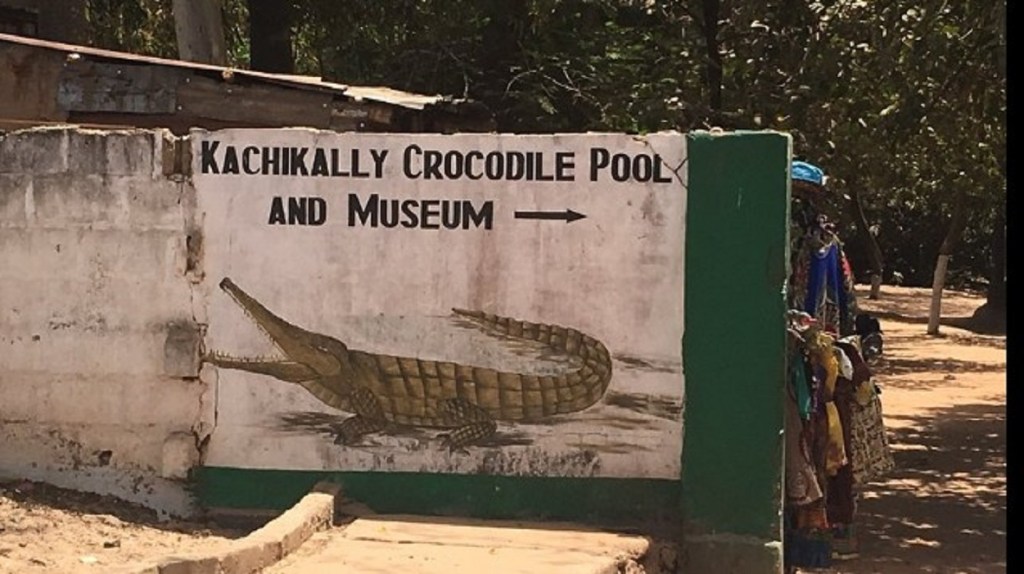
Dit is een onderdeel van de excursie South The Gambia Tour.
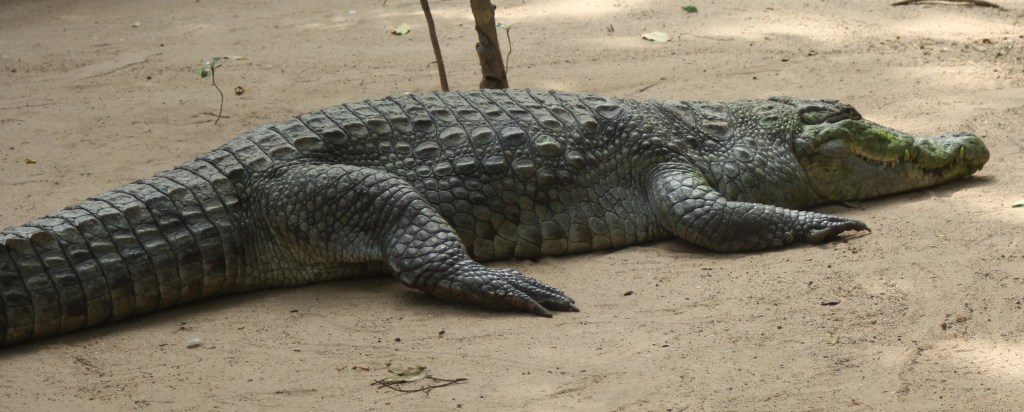
Eén van de meest populaire toeristen attracties in The Gambia is de Kachikally Crocodile Pool. Een zoetwaterpoel in de buitenwijk van Kachikally en de verblijfplaats van tientallen krokodillen. De Krokodillen poel ligt in het leefgebied van de Bojang stam die zich zo’n 500 jaar geleden in het gebied vestigden. Tegenwoordig leven er ongeveer 100 van deze eeuwenoude dieren die als tussenpersoon fungeren tussen de bezoekers en de geest Kachikally. De krokodillenpoel is nu misschien een beetje een ‘toeristenval’ geworden, maar het is ook nog steeds een populair bedevaartsoord voor onvruchtbare vrouwen. De vrouwen komen van heinde en verre om zich te laten baden in het geneeskrachtige water. Sommige exemplaren bereiken een indrukwekkende lengte van bijna 3 meter. De krokodillen zijn gewent aan menselijk bezoek. Meestal liggen er op de oevers van de poel tien tot twintig krokodillen in de zon. Onder hen enkele ruim twee meter lange exemplaren die volledig gewend zijn aan menselijke bezoekers. Daarnaast worden de dieren elke ochtend gevoerd met vis. Dat is noodzakelijk omdat in de poel geen vis meer aanwezig is en de dieren anders op zoek naar voedsel door de wijk gaan trekken. Dit heeft als gevolg dat de dieren met een volle buik toestaan om op de rug of staart te worden geaaid. De grootste van deze reptielengiganten, een 70-jarige, 3 meter lange krokodil genaamd Charlie is inmiddels alang overleden.
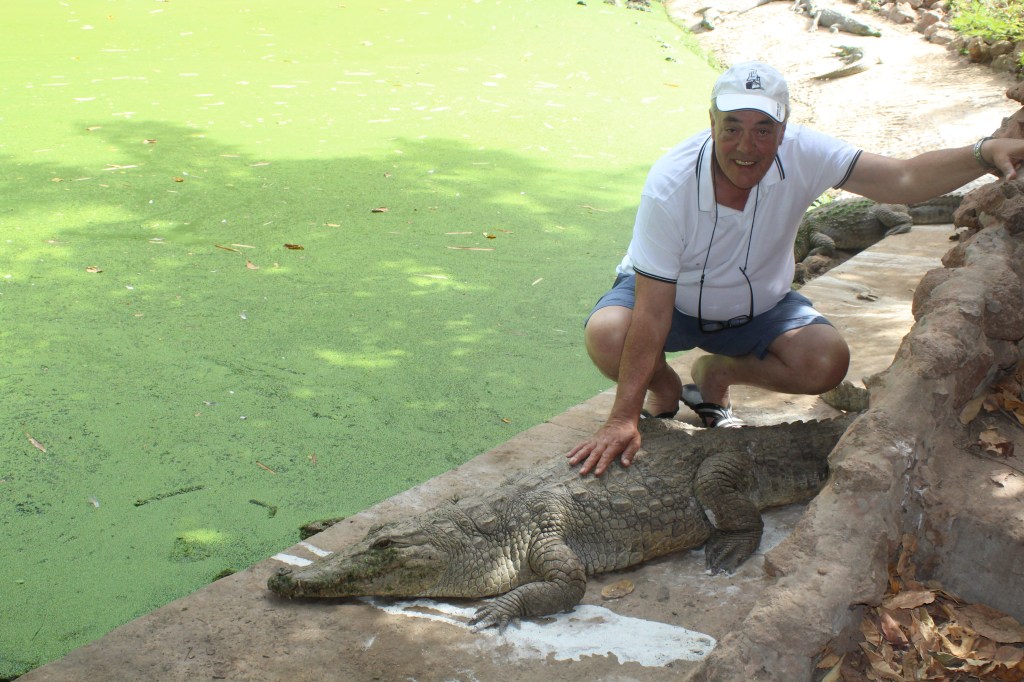
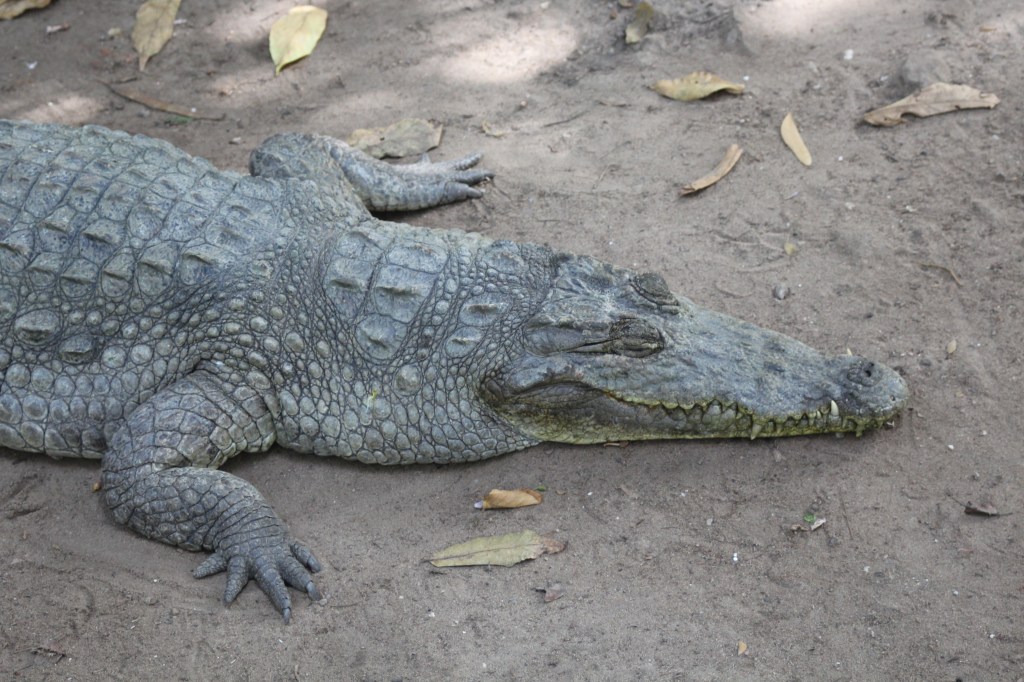
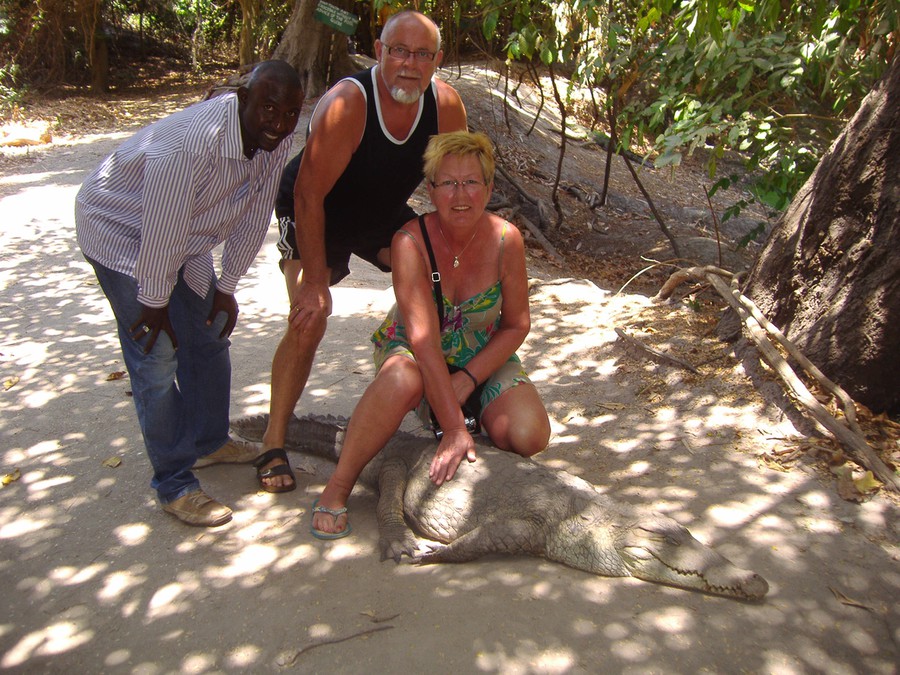
Petting crocodiles at the Kachikally Crocodile Pool.
ENGLISH TRANSLATION
This is part of the South The Gambia Tour excursion. One of the most popular tourist attractions in The Gambia is the Kachikally Crocodile Pool. A freshwater pool in the outskirts of Kachikally and home to dozens of crocodiles. The crocodile pool is located in the territory of the Bojang tribe, who settled in the area about 500 years ago. Today, there are about 100 of these ancient animals, which act as intermediaries between visitors and the spirit of Kachikally. The crocodile pool may now be somewhat of a ‘tourist trap,’ but it is still a popular pilgrimage site for infertile women. Women come from near and far to bathe in the healing waters. Some specimens reach an impressive length of nearly 3 meters. The crocodiles are accustomed to human visitors. Usually, ten to twenty crocodiles are lying on the shores of the pool in the sun, among them a few over two meters long. In addition, the animals are fed fish every morning. This is necessary because there are no longer any fish in the pond, and otherwise the animals would go searching for food through the neighborhood. As a result, the animals, with full bellies, allow themselves to be stroked on the back or tail. The largest of these reptile giants, a 70-year-old, 3-meter-long crocodile named Charlie, has since long passed away.
SPANISH
Esta es una parte de la excursión del Tour por el Sur de Gambia.
Una de las atracciones turísticas más populares de Gambia es la Piscina de Cocodrilos de Kachikally. Una piscina de agua dulce a las afueras de Kachikally, hogar de docenas de cocodrilos. La piscina de cocodrilos se encuentra en el territorio de la tribu Bojang, que se asentó en la zona hace unos 500 años. Hoy en día, hay alrededor de 100 de estos antiguos animales, que actúan como intermediarios entre los visitantes y el espíritu de Kachikally. La piscina de cocodrilos puede ser ahora una especie de “trampa para turistas”, pero sigue siendo un lugar de peregrinación popular para mujeres infértiles. Mujeres vienen de todas partes para bañarse en las aguas curativas. Algunos ejemplares alcanzan una impresionante longitud de casi 3 metros. Los cocodrilos están acostumbrados a las visitas humanas. Por lo general, de diez a veinte cocodrilos descansan en las orillas de la piscina al sol, algunos de ellos de más de dos metros de largo. Además, los animales son alimentados con pescado todas las mañanas. Esto es necesario porque ya no hay peces en el estanque, y de lo contrario, los animales buscarían comida por el vecindario. Como resultado, los animales, con la barriga llena, se dejan acariciar en el lomo o la cola. El más grande de estos gigantes reptiles, un cocodrilo de 70 años y 3 metros de largo llamado Charlie, falleció hace mucho tiempo.
 THE GAMBIA SANTOSU TOURS